
Paver Resanding & Sealing Vancouver BC
Joints Refilled. Pavers Locked. Weeds Gone.
Paver re-sanding and sealing for driveways, patios, courtyards and walkways across Metro Vancouver. Joints cleaned out and refilled with polymeric sand, activated so it sets firm, and sealed where the surface calls for it, using Trident paver systems.
- Fully Insured & WorkSafeBC Covered
- Experienced, Trained Crews
- Locally Owned & Operated
The Joints Are What Hold A Paver Surface Together
Pavers do not sit on anything clever. What stops them moving is the sand packed into the joints between them, and that sand washes out a little with every heavy rain and a lot with every careless pressure wash. Once the joints are low, pavers rock underfoot, weeds and moss take root in the gaps, and water runs down into the base instead of across the surface, which is what eventually causes sinking and uneven ridges.
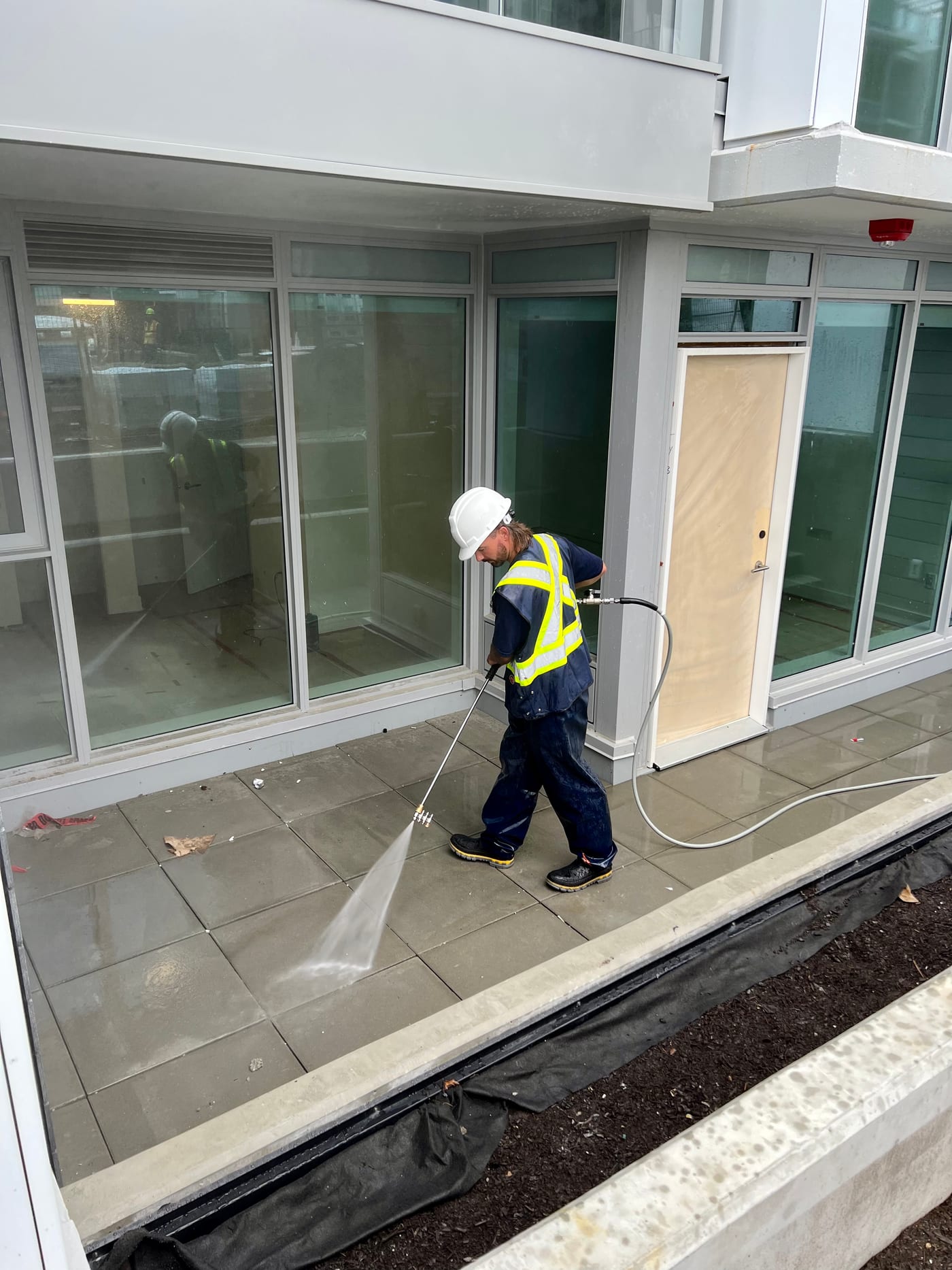
Re-sanding refills those joints with polymeric sand, swept in dry to full depth and then activated with water in stages so the binder sets firm rather than staying loose. It is almost always done straight after a pressure wash, because washing is what exposes how far the joints have dropped, and the surface has to be clean and dry before new sand goes in.
- 5+Years Serving Metro Vancouver
- 1,100+Jobs Completed
- $5MLiability Coverage
What's covered
What We Restore
Driveways, patios and plazas fail in the same way and are restored in the same order: joints cleared, sand replaced and set, then sealed where it suits the surface.
-
Driveways & Parking Pads
Vehicle-rated joint sand for surfaces that take turning tires, with sealing to resist oil and tire marks where the driveway sees daily use.
-
Patios, Paths & Pool Decks
Joints refilled and set so the surface stops rocking and sheds water, with weeds and moss removed from the gaps first.
-
Courtyards, Plazas & Walkways
Strata and commercial paving restored in sections so entrances and routes stay open, scheduled around residents and operating hours.
-
Joint Cleaning & Weed Removal
Failed sand, moss, weeds and debris cleared from the joints before anything new goes in. New sand over old growth only traps it.
-
Polymeric Re-Sanding
Trident polymeric sand swept to full depth in every joint and activated in stages, so it locks the field of pavers together rather than washing out.
-
Paver Sealing
A compatible sealer over the finished surface, natural or enhanced, to hold the sand in place and resist staining and weed growth.
Concrete & stone sealing →
What's Included
Old Joint Material Out
Failed sand, weeds, moss and debris cleared from the joints first, so the new sand bonds to the paver rather than to whatever was growing there.
Polymeric Sand In
Swept fully into every joint to the correct depth, not skimmed across the top where it washes straight out again.
Activated Properly
Watered in stages to set the binder without flooding it out. Rushing this step is why most re-sanding fails.
Sealing Where It Suits
An optional sealer over the top locks the surface, resists staining and makes future cleaning easier.
What to expect
How It Works
-
Get Your Quote
Tell us about the property and the work you need completed. We review the scope, access and site requirements, then provide a written scope and price before scheduling.
-
We Complete The Service
We coordinate scheduling and access, arrive as planned and complete the agreed scope using the appropriate equipment and cleaning method for the property.
-
Final Review & Documentation
We complete a final review, leave the work area tidy and provide completion photos or service documentation where applicable.
Already booked? Prepare for your service →
Before you book
Five Questions Worth Asking
What to confirm before choosing a paver resanding and sealing contractor, along with how Flat Mate approaches each one.
What sand are you putting in the joints?
Regular builder's sand washes straight back out within a season. Polymeric sand contains a binder that sets when activated, which is what holds the joint and keeps weeds from germinating.
Our answerTrident polymeric sand, swept to full depth and activated in stages.
How do you prepare the joints first?
New sand over old growth traps it. Ask whether the failed sand, moss and weeds are cleared out before the new material goes in.
Our answerJoints cleared and the surface washed and dried before any new sand is swept in.
Are you properly insured and covered by WorkSafeBC?
For strata and commercial properties in particular, ask for current documentation rather than relying on verbal confirmation.
Our answerFlat Mate carries $5 million in liability coverage and maintains WorkSafeBC coverage. Documentation is available on request.
How is the sand activated, and when can the surface be used?
Polymeric sand that is flooded washes out; sand that is under-watered never sets. Ask how the activation is done and how long the surface needs before foot and vehicle traffic.
Our answerWatered in stages to set the binder without flooding it out; foot traffic the same day, vehicles after 24 to 48 hours depending on weather.
What is included in the quote, and is sealing part of it?
A clear quote should cover the cleaning, the joint preparation, the sand and whether a sealer is included or optional.
Our answerA written scope and price before scheduling, with sealing quoted as a line you can take or leave.
Paver Resanding & Sealing FAQs
How do I know if the pavers need re-sanding?
Run a finger down a joint. If the sand sits more than a few millimetres below the paver surface, or the pavers rock at all underfoot, the joints have washed out. Weeds growing between the pavers are the other clear sign.
Why polymeric sand rather than regular sand?
Regular sand washes out again within a season. Polymeric sand contains a binder that sets when activated with water, so it stays in the joint and resists weed germination. We use Trident paver systems.
Does pressure washing damage the joints?
It can, if a wand is aimed into them at full pressure. Pavers are washed with a surface cleaner at a controlled pressure, and washing and re-sanding are usually booked together because the wash is what exposes the low joints.
When can the surface be used again?
Foot traffic the same day once the sand has set, and vehicles after 24 to 48 hours depending on weather. We confirm on the day based on how the sand actually cured.
How long does re-sanding last?
Several years on a patio or walkway, less on a driveway that sees turning tires or a surface that is pressure washed carelessly. Sealing over the finished joints extends it further by holding the sand in place.
How much does paver re-sanding and sealing cost in Metro Vancouver?
Pricing depends on the area, the joint width and depth, how much cleaning and weed removal is needed first, and whether the surface is sealed. We provide a clear written quote before scheduling so the scope and price are established in advance.
Planning A Paver Resanding & Sealing Project?
Tell us about the surface, its approximate area and whether it has been sealed before. We'll review the scope and provide a written scope and price before scheduling.
Paver Resanding & Sealing Reviews
What Our Customers Are Saying
Real feedback from paver resanding & sealing projects across Metro Vancouver.
Also from Flat Mate